Review: Kawaii Cute Kitchen Tools Clipart for Embroidery
As a designer who spends most of my day staring at screens and then translating those pixels into thread, I have learned to be incredibly picky about the design assets I bring into my workflow. When I first opened the folder for Kawaii Cute Kitchen Tools Clipart, my initial reaction was one of immediate warmth. There is something undeniably cheerful about simple black and white vector art that features smiling kitchen utensils. However, my job isn't just to admire cute graphics; it is to determine if they will survive the journey from a digital Illustrations file to a durable, washable finished product.
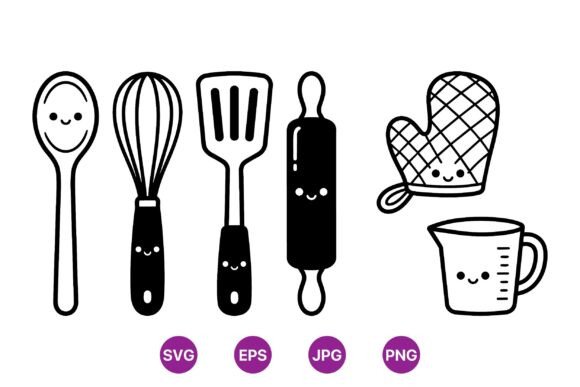
The collection includes staples like a spoon, whisk, spatula, rolling pin, oven mitt, and measuring cup, all anthropomorphized with adorable faces. The mood is light, playful, and inviting. For an embroidery project, this visual personality is crucial. It tells me immediately that these designs belong on items meant to bring joy to daily routines. They are not serious corporate logos or intricate heritage patterns; they are perfect for adding a touch of whimsy to a handmade product.
Visualizing the Stitch-Out Potential
The simplicity of the black and white style is a double-edged sword in embroidery. On one hand, clean lines usually translate well into running stitch or simple fill stitch areas, reducing the risk of thread breaks and bird nests. On the other hand, "simple" can sometimes mean "lacking definition" if the digitizer hasn't accounted for thread pull. Looking at the shapes in this Graphics set, the outlines appear bold enough to hold their own. The faces on the tools are distinct, which is vital because tiny facial features can easily get lost if the stitch density is too low or if the fabric texture is too rough.
I immediately started imagining this as a tote bag design. Picture a canvas tote with a row of these happy kitchen tools marching across the bottom. The contrast of black thread on natural cotton would be striking. Alternatively, this feels incredibly suited for baby embroidery. A bib set featuring a smiling spoon and a happy bottle would make an excellent personalized gift for a baby shower. The kawaii aesthetic aligns perfectly with nursery decor, suggesting these could also work beautifully on pillow covers or even a small wall hanging for a child's play kitchen.
Real-World Application: The Apron Project
To truly test the viability of Kawaii Cute Kitchen Tools Clipart, I mentally ran through a specific client scenario. Let's say a local bakery owner wants custom aprons for her staff. She needs something friendly but professional enough for a boutique shop. These icons fit that bill perfectly. Unlike complex applique design options that might add bulk and discomfort under a waist tie, these flat vector-style graphics would sit smoothly against the fabric.
In this scenario, I would likely place the rolling pin or whisk on the chest pocket area. The custom apparel market loves unique touches, and having a "mascot" tool for each staff member could be a fun branding exercise. The cheerful mood of the design helps create a welcoming atmosphere for customers. If I were selling this as a small shop product on Etsy, I would market it as part of a "Happy Baker" collection. The key here is versatility; because the style is generic enough to fit various contexts but specific enough to be recognizable, it appeals to a wide range of Etsy sellers and craft entrepreneurs.
Navigating Fabric and Hoop Challenges
While the design looks promising on paper, real-life embroidery situations introduce variables that a static image cannot show. One major consideration is the hoop size. Since these are individual icons, they likely fit into smaller hoops, which is great for caps or cuffs. However, placing kawaii faces on a curved surface like a cap requires careful attention. The distortion inherent in cap framing can stretch a round face into an oval, ruining the cute expression. I would advise testing this on a scrap piece of the actual cap material first.
Fabric choice is another critical factor. These designs rely on clear outlines. If you attempt to stitch them on a highly textured fabric like a looped terry cloth towel or a fuzzy fleece sweatshirt, the fine details of the eyes and mouths might disappear into the pile. For sweatshirt embroidery, I would recommend using a heavier cut-away stabilizer to prevent the fabric from sinking into the stitches, ensuring the thread colors pop against the background. Conversely, on thin, stretchy fabrics, the tension of the machine embroidery design could cause puckering. Always test on scrap fabric that matches your final garment weight.
Commercial Viability and Brand Consistency
For those running a craft business, consistency is king. Using Kawaii Cute Kitchen Tools Clipart across different products—from tea towels to oven mitts—creates a cohesive brand identity. Customers recognize the style, which builds trust. When a buyer sees a high-quality embroidered patch with crisp stitching and a cute design, they perceive higher value. This perception allows you to price your holiday embroidery gifts or wedding favors at a premium.
However, we must address the technical specifics that are often missing from product descriptions. The listing mentions a "Download include," but it does not specify the exact file formats (like PES, DST, EXP) or the specific stitch counts. Before committing to a large production run of commercial embroidery items, you must verify these details. Are these ready-to-stitch files, or are they vector Illustrations that you need to digitize yourself? If they are pre-digitized, check the recommended hoop size limits. If they are vectors, ensure your digitizing software can interpret the black and white paths correctly without creating unnecessary jump stitches.
Final Verdict for Designers
My assessment of Kawaii Cute Kitchen Tools Clipart is positive, provided you approach it with a strategist's eye. It is an excellent resource for creating printable mockup previews to gauge customer interest before stitching a single thread. The simple aesthetic reduces the likelihood of complex threading errors, making it suitable for both beginners and pros looking for quick turnaround items.
To get the best results, pay attention to thread contrast. While the source art is black and white, don't be afraid to experiment with colored threads for the faces or handles to match specific brand palettes. Just ensure the stitch density remains balanced so the design doesn't become too stiff. Finally, always double-check the licensing terms. If you plan to sell these as digital embroidery file products or use them in mass-produced merchandise, confirm that the license permits commercial use.
In conclusion, this set offers a delightful blend of functionality and charm. Whether you are making a personalized gift for a friend who loves to cook or stocking your online store with trendy kitchen linens, these icons have the potential to perform well. They remind us that embroidery doesn't always have to be grand or complex to be effective; sometimes, a simple smiling spatula is exactly what a product needs to connect with a customer. Just remember to respect the limitations of your machine and fabric, and let the kawaii spirit shine through in your stitching.