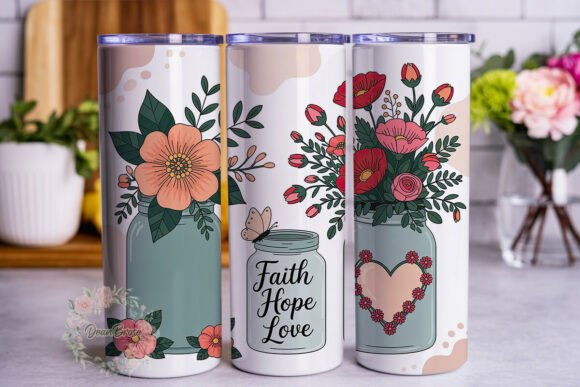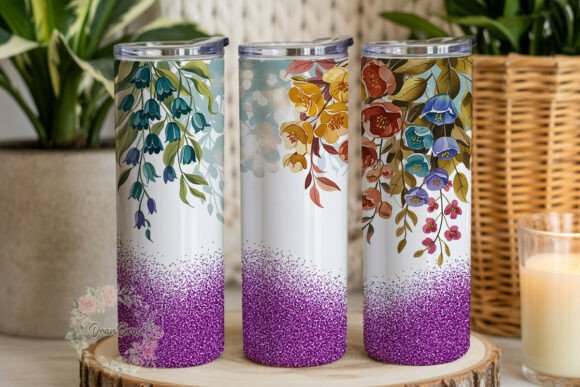
Review: Watercolor Glitter Floral 20oz Wrap Design
As a designer who spends more time at the hoop than away from it, I approach every new digital embroidery file with a mix of excitement and skepticism. We've all been there: you buy a stunning graphic online, only to realize once you start digitizing or applying it that the details are too fine for standard thread, or the layout doesn't translate well to fabric. Today, I'm taking a close look at the Watercolor Glitter Floral 20oz Wrap. While this asset is technically categorized under Tumbler Wraps and Graphics, my job is to evaluate its potential beyond the sublimation printer. Can this high-resolution artwork survive the transition to a machine embroidery design? Let's dig into the practical reality of using this piece for real-world projects.
First Impressions: Mood and Visual Personality
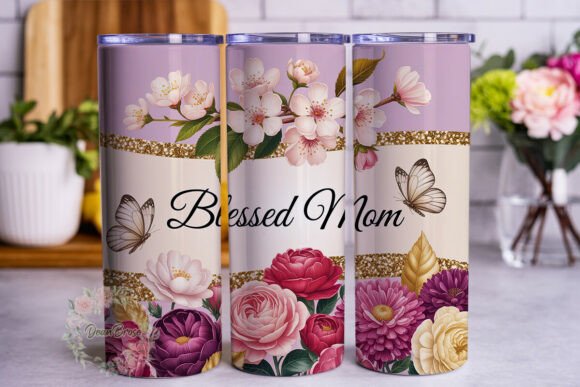
The moment you open the file, the first thing that strikes you is the resolution. At 300 DPI with dimensions of 9.3″ x 8.2″, the clarity is exceptional. The "watercolor" aspect suggests soft, bleeding edges and organic shapes, while the "glitter" element implies texture and sparkle. In a digital format intended for tumblers, this creates a luxurious, celebratory mood perfect for bridal parties or birthday gifts. However, for us embroiderers, this visual personality presents a unique challenge. Watercolor effects rely on gradients that are easy to print but difficult to stitch without losing that softness. The glitter effect, usually achieved with foil or specific inks in the printing world, needs to be interpreted carefully if we want to replicate that shine with thread.
This isn't just a pretty picture; it's a complex arrangement of floral elements that demands respect for stitch density. If you were to blindly convert this PNG into an embroidery file without adjusting for fabric, you risk creating a stiff, cardboard-like patch. The design feels naturally suited for boutique branding—think high-end custom apparel or decorative home goods where the artwork is the hero.
Real-World Application: From Screen to Stitch
Let's scenario-test this. Imagine a client comes to your craft business requesting a set of matching tote bags for a bridesmaid proposal. They love the watercolor aesthetic but want the durability and tactile feel of embroidery. Using the Watercolor Glitter Floral 20oz Wrap as your base artwork, you have a fantastic starting point. The large dimension allows you to scale it down slightly to fit a standard hoop while maintaining incredible detail.
For a project like this, I would recommend treating the design as a large-scale applique design or a mixed-media piece. Instead of trying to fill every pixel with satin or fill stitches, consider using the graphic as a printed underlay (if your machine supports it) or simplifying the watercolor blooms into broader fill stitch areas. The "glitter" component could be brilliantly solved by incorporating metallic thread or even actual sequin waste in the denser floral centers. This approach transforms a static graphic into a dynamic handmade product that offers value far beyond a simple print.
Beyond tote bags, think about sweatshirt embroidery. A cropped hoodie featuring this floral wrap scaled down to the chest or expanded across the back could be a standout item for an Etsy seller. The organic shapes of the flowers work beautifully on the textured surface of fleece, provided you manage the stabilizer correctly to prevent puckering. For baby embroidery, you might isolate a single flower from the wrap, simplifying the detail to ensure comfort against sensitive skin, turning a complex wrap into a sweet, personalized accent on a onesie or blanket.
Technical Considerations and Fabric Challenges
Here is where experience matters most. While the source file is high quality, translating it to thread requires vigilance. If you are working with textured fabrics like waffle weave or heavy canvas, the fine details of the watercolor petals might get lost. In these cases, increasing the stitch count or using a thicker thread weight might be necessary, though this alters the original look.
You must also be cautious with stretchy fabric. The dense areas implied by the "glitter" description could cause distortion on a t-shirt or jersey knit if not properly stabilized. Always test on scrap fabric first. Check how the thread colors blend; watercolor designs often use subtle shifts in hue that standard embroidery palettes might struggle to replicate without extensive color blending techniques.
Another critical factor is the hoop size. Since the original graphic is nearly 9 inches wide, you will likely need a large hoop or a multi-position setup if you intend to use the full wrap. Trying to cram this into a small 4x4 hoop for a pocket detail would require significant redesigning, potentially losing the flow of the floral arrangement. Furthermore, avoid placing this design on curved surfaces like caps unless you drastically simplify the layout; the flat, sweeping nature of the wrap does not conform well to the structured front panel of a hat without warping.
Enhancing Brand Value and Customer Trust
In the world of commercial embroidery, presentation is everything. Using a high-quality base graphic like the Watercolor Glitter Floral 20oz Wrap elevates the perceived value of your finished product. Customers can tell the difference between a pixelated, low-effort design and one that has crisp lines and thoughtful composition. When you deliver a personalized gift or a piece of small shop product line that features such detailed artistry, it builds trust. It tells the buyer that you care about the aesthetics as much as the functionality.
For those creating printable mockups to sell digital previews or market their services, this file is a goldmine. Because it is watermark-free and high resolution, you can create stunning visuals for your portfolio without needing to stitch the item first. This helps in securing orders before you even cut the fabric. However, remember that what looks good on a screen must hold up in the wash. Ensure your stitch settings account for frequent washing, especially if the final item is a kitchen towel or apron.
Final Designer Notes and Best Practices
Before you commit to stitching this on a client's garment, take these practical steps:
- Check Licensing: Even though the file is clean, confirm the license terms regarding commercial use for physical goods versus digital resale.
- Contrast Testing: View the design in black and white to ensure the floral shapes stand out from the background. Low contrast in the watercolor sections might vanish when stitched.
- Density Review: If digitizing this yourself, reduce fill density in overlapping areas to prevent thread breaks and bulkiness.
- Fabric Match: Pair this design with stable, medium-weight fabrics like twill, denim, or cotton canvas for the best results.
- Detail Inspection: Zoom in on the tiniest leaves or petals. If they are too small for a needle to traverse, simplify them or remove them entirely.
The Watercolor Glitter Floral 20oz Wrap is a versatile asset that bridges the gap between digital graphics and tactile embroidery. With the right technical adjustments and a keen eye for material compatibility, it can become the centerpiece of a profitable holiday embroidery collection or a signature line of embroidered patches. It rewards the designer who takes the time to understand its structure, offering a path to create truly unique, high-value items for your customers.