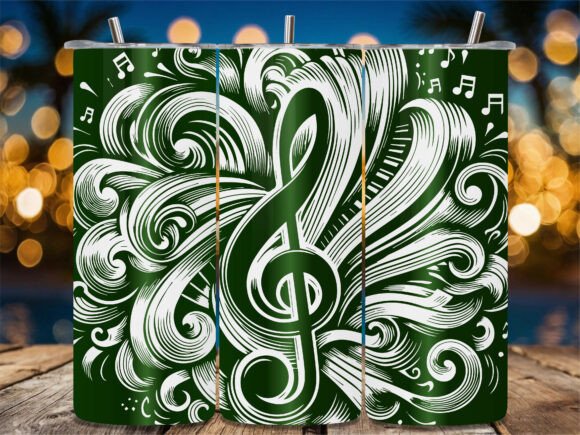
Musical Treble Clef Swirl: A Designer's Review
As someone who spends more time staring at stitch maps than most people spend on their phones, I approach every new machine embroidery design with a healthy dose of skepticism. We've all been there: you buy a beautiful digital embroidery file, load it up, and realize the density is off, the underlay is missing, or the details are so fine they'll vanish into the fabric texture after one wash. That is why I was particularly interested in putting the Musical Treble Clef Swirl through its paces. This isn't just about whether it looks good on a screen; it is about whether it holds up as a finished product in the hands of a customer.
At first glance, the Musical Treble Clef Swirl exudes a sense of elegant motion. Unlike rigid, blocky music notes often found in generic clip art, this design leans into fluidity. The swirl element suggests movement, making it feel less like a static symbol and more like a visual representation of sound waves. For a designer, this is crucial. When we are creating custom apparel or handmade products, we want the embroidery to feel integrated into the garment, not just slapped on top. The layout here offers a natural flow that works exceptionally well for vertical placements, such as down the leg of sweatpants or along the spine of a jacket.
Real-World Application: The Boutique Music Teacher Gift
To truly test this design, I envisioned a specific real-life scenario that many of us face during the holiday season or graduation periods: creating a high-end gift for a music teacher or a student recital. I decided to simulate a project using a heavy-weight cotton tote bag, a popular item for Etsy sellers and small shop products. The goal was to create something that felt boutique-quality rather than mass-produced.
When stitching the Musical Treble Clef Swirl onto the tote, the interplay between the satin stitch borders and the interior fill stitch became immediately apparent. The design relies on a balance of density that, if managed correctly, creates a lush, textured look. On a sturdy canvas, the swirls popped with definition. I could easily imagine this same design translating beautifully to a sweatshirt embroidery project, perhaps placed on the upper left chest for a subtle statement or centered on the back for a bold look. For baby embroidery, scaling this down for a onesie would require careful attention to the smallest curves, but the organic shape lends itself well to soft, rounded baby items where harsh angles feel out of place.
Navigating Fabric Textures and Stitch Density
However, no design is universal, and honest review means discussing where caution is needed. The Musical Treble Clef Swirl features intricate curves that demand respect regarding stitch density. If you are working with a textured fabric like a waffle knit or a loose-weave linen, there is a risk that the finer details of the swirl could get lost or cause puckering if the stabilizer isn't up to the task.
For those attempting this on stretchy fabrics, such as performance tees or thin jersey, I strongly advise using a cut-away stabilizer. The momentum of the swirl design can pull on lightweight materials, leading to distortion. Similarly, if you are planning to use this for an embroidered patch, ensure your backing is dense enough to support the turn-of-the-cloth on those tight spiral sections. Dark fabrics present another consideration; while the design is striking, you must ensure your thread colors provide sufficient contrast. A metallic gold or silver thread against navy or black could elevate this from a simple craft project to a piece of commercial embroidery art, but testing on scrap fabric first is non-negotiable.
Commercial Viability and Brand Consistency
For the craft business owner, the value of a design lies not just in its aesthetics but in its reliability. Does it stitch out consistently? Does it look professional enough to justify a higher price point? The Musical Treble Clef Swirl has the potential to be a staple in a catalog of design assets for music-themed merchandise. Its versatility allows it to fit into various niches, from holiday embroidery gifts for band parents to year-round inventory for music studios.
Visual appeal is where this design shines. In a marketplace saturated with generic graphics, the artistic flair of the swirl adds a layer of sophistication. It signals to the buyer that thought went into the finished product. This enhances brand consistency if you are building a shop around artistic or musical themes. Furthermore, because the design is graphic yet detailed, it translates well into printable mockups for online listings. A clear, crisp image of this design on a tote bag design preview can significantly boost buyer engagement and trust.
Practical Notes for the Serious Embroiderer
Before you commit to running this on a client's expensive garment, here are my practical recommendations based on reviewing similar Graphics in the Crafts category:
- Check the Hoop Size: Ensure the design fits your available hoop without needing excessive re-hooping, which can lead to alignment issues in continuous swirl patterns.
- Thread Selection: Consider using a 40-weight thread for the fill to reduce bulk, especially if the design is scaled down for caps or small accessories.
- Underlay Inspection: Open the file in your editing software to verify the underlay stitches. Good underlay is critical for preventing the fabric from showing through the satin columns of the clef.
- Licensing Verification: Always confirm the license terms. While this design is excellent for personalized gifts, selling the embroidery file itself versus the stitched item often has different restrictions.
- Mockup Testing: Run a test stitch-out in black and white thread first. This strips away the distraction of color and lets you focus purely on the stitch quality and shape integrity.
It is also worth noting that while the product description mentions laser engraving for tumblers, as an embroidery specialist, I am evaluating this strictly for thread application. If the original asset is vector-based or high-resolution enough for laser work, it often translates well to embroidery, but the technical requirements differ. Always ensure you have the correct embroidery file format (like PES, DST, or EXP) for your specific machine brand.
In conclusion, the Musical Treble Clef Swirl is a compelling addition to any designer's library. It bridges the gap between decorative flair and recognizable symbolism. Whether you are outfitting a local choir, creating custom apparel for a music festival, or simply adding a personal touch to a kitchen towel for a musician friend, this design offers the versatility and visual impact needed to create memorable items. Just remember: the difference between a good stitch-out and a great one often comes down to preparation. Respect the fabric, choose your stabilizer wisely, and let the music flow through your needle.